
Bird Migration on Radar
I have mentioned before that we often see birds at night when the radar is in clear-air mode–the highly sensitive setting that is used when there is not a lot of precipitation around. In fact, there is a whole discipline centered around this tool: radar ornithology.
Well, we have our new coastal radar and I was wondering how the birds look from a coastal perspective and particularly whether our feathered friends like to fly offshore. Lets get some answers!
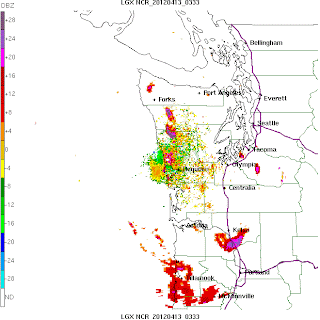
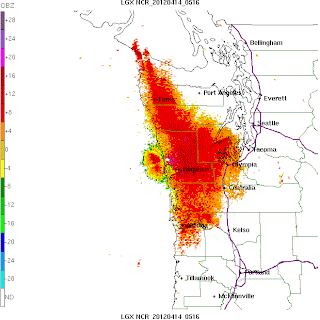
Here is the composite radar image a little after sunset, when there was still plenty of light in the sky (8:33 PM, Thursday). A few echos, with a lot of ground clutter around the radar (radar beam hitting the surface).
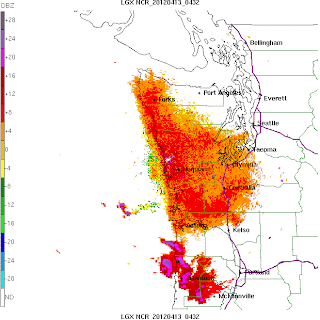
One hour later, a lot of red/orange echoes–those are the birds.
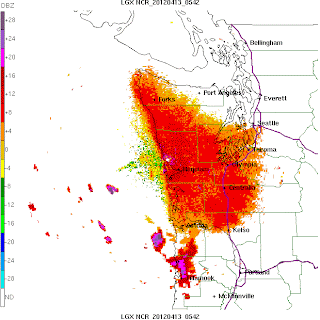
An hour later…even more birds. Interestingly the birds don’t seem to fly very far offshore (the few isolated echos you see over the Pacific are some light showers). Perhaps someone can tell us why.
These bird echoes disappeared around sunrise….something that is clearly not meteorological.
The sun is long set tonight (Friday) and here is the latest radar image from Langley. Same deal…lots of birds. Note the appendage sticking out near Grays Harbor…that is sea clutter….the radar beam is hitting the ocean surface and reflected back to the radar. There was some worry that our new radar might have a more serious sea clutter problem, but as you see it is a minor issue.
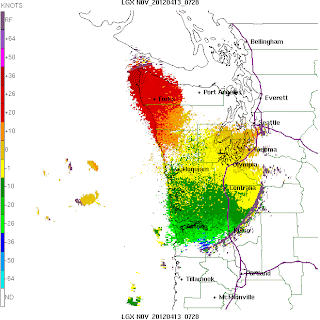
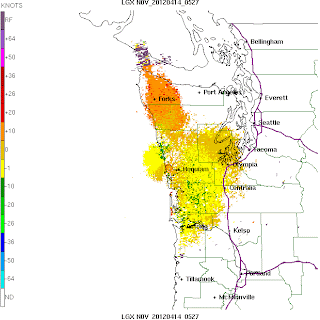
Tonight the winds are from the north aloft and the Doppler velocities are weaker but still indicate targets that are moving north (see image), but at a slower speed. The reason: tonight our feathered friends have a head wind slowing their progress!
If only birds could interpret weather radar imagery….
 |
| Preparing for tonight’s migration |
You Might Also Like Our Friends' Posts
Comments are closed for this story.


 Choosing from the best US Canadian and international sources, we gather and select weather stories from around the world. World Weather Post not only brings you breaking news about people affected by weather, but also provides insight on how weather is affected by people. You will also find a sense of humour and a curiosity for understanding the weather, climate change and the environment. World Weather Post, where everybody talks about the weather.