
90-Year Anniversary of Deadly Knickerbocker Blizzard
By Meghan Evans, Meteorologist
Jan 28, 2012; 8:32 AM ET
Today marks the 90th anniversary of the deadly roof collapse of the Knickerbocker Theater in Washington, D.C., resulting from a massive blizzard that struck portions of the South and the mid-Atlantic.
The weight of heavy snow proved too much for the flat roof of the Knickerbocker Theater, which was built in 1917. Drifting of snow likely led to an uneven distribution of weight that added to the devastating roof collapse that killed 98 people and injured 133 others late on Jan. 28, 1922.
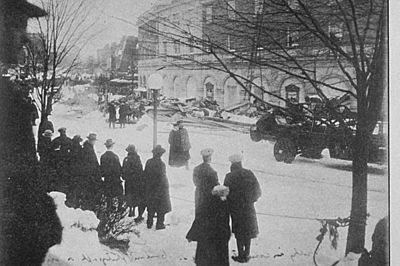 Photo of the Knickerbocker Theater following the collapse of the roof from NOAA’s Historical Photo Collection. Click here to see more incredible photos of Washington, D.C., covered in snow from the Knickerbocker Blizzard.
Washington, D.C., was buried by 28.0 inches of snow from the blizzard, setting a record for the heaviest snow in 24 hours. This record still stands today.
Other snow amounts include 19.0 inches in Richmond, Va., and 33.0 inches in Rock Creek Park, which sits along the Washington, D.C.-Maryland border. Railroads between Philadelphia, Pa., and Washington, D.C., were buried beneath as much as 36.0 inches of snow.
Up to 16-foot-high snow drifts occurred with the ferocious winds accompanying the storm between Philadelphia and Washington, D.C.
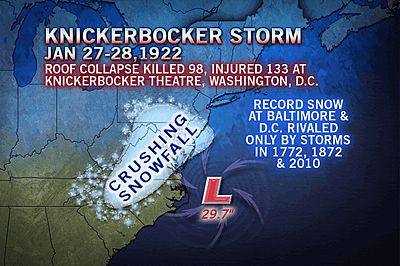
The storm shut down all forms of travel in the nation’s capitol, forcing people to travel to work on foot in treacherous conditions. A 24-hour record snowfall in Baltimore, Md., brought travel to a halt as well.
You Might Also Like Our Friends' Posts
Comments are closed for this story.




 Choosing from the best US Canadian and international sources, we gather and select weather stories from around the world. World Weather Post not only brings you breaking news about people affected by weather, but also provides insight on how weather is affected by people. You will also find a sense of humour and a curiosity for understanding the weather, climate change and the environment. World Weather Post, where everybody talks about the weather.